 By The AdLabs Team
Why Everyone's Wrong About Amazon PPC
The Amazon PPC space has a problem. Not a lack of advice; there's too much of it. The problem is that most of it is recycled, untested, and dangerously oversimplified.
The truth is, you don't need "hacks" or secret tricks to run good PPC. You need a solid knowledge base, sound methodology, and the discipline to follow data instead of hype.
"Lower your ACOS." "Let AI handle it." "Just use TACOS." "Top of search is all that matters."
These sound reasonable. They get shared on LinkedIn. They get taught in courses. And they lead sellers off a cliff every single day.
We manage millions in Amazon ad spend across hundreds of brands. We've debated the sharpest minds in this space, and we've changed our own positions when the data demanded it. This guide is the result of those debates. Every myth here is something we've either believed ourselves at one point, or had to argue against while someone was losing money believing it.
The most expensive thing in Amazon PPC isn't a bad bid. It's a wrong mental model applied confidently for months.
This isn't a "how to set up your first campaign" guide. This is for sellers and operators who already know the basics and are ready to challenge the assumptions sitting underneath their entire strategy.
We're going to take nine of the biggest myths and debates in Amazon PPC, lay out the common belief, then demolish it (or occasionally, defend it) with data and logic.
Fair warning: some of these will make you uncomfortable. That's the point.
"AI Will Replace Manual PPC Management"
Why This Debate Exists
Every tool vendor on the planet is selling "AI-powered PPC." It sounds incredible. Who wouldn't want a machine working 24/7, making thousands of micro-adjustments while you sleep?
The problem isn't what AI can do. It's what people think AI can do.
"AI is incredibly good at pattern recognition and executing rules at scale. What it can't do is understand that your sales dropped because a competitor launched a TikTok campaign yesterday. It can't tell you that your conversion rate tanked because Amazon changed your main image without permission. It just sees numbers moving."
Where AI Actually Helps
- Bid adjustments at scale: Adjusting 10,000 bids based on performance rules? AI does this faster and more consistently than any human.
- Keyword harvesting: Scanning search term reports and surfacing converting queries you didn't know about.
- Negative keyword management: Identifying and eliminating waste from broad/auto campaigns.
- Dayparting patterns: Recognizing time-of-day performance patterns across large datasets.
- Anomaly detection: Flagging when something looks "off" so a human can investigate.
- Querying your PPC data: AdLabs offers an MCP (Model Context Protocol) integration that lets you query your own Amazon PPC data from your favorite LLM. Ask AI questions about your specific performance data, trends, and patterns in your account.
Where AI Falls Apart
- Strategy layer decisions: Should you run a ranking campaign on this keyword? AI doesn't know your margin, your inventory runway, or your Q4 goals.
- Root cause analysis: Why did ACOS spike last Tuesday? AI sees the spike. It cannot go investigate that a competitor slashed their price by 30%.
- Creative and listing decisions: Your CTR dropped. AI can lower the bid. It can't tell you your main image looks terrible next to the new competitor in position 2.
- Market context: Category seasonality, new competitor launches, Amazon policy changes, external traffic effects. AI operates in a vacuum.
- Budget allocation across objectives: How much to invest in ranking vs. profitability vs. defense? This requires business strategy, not regression analysis.
The most dangerous seller is the one who turns on "AI mode" in their tool and walks away for three months. They come back to blown budgets, tanked rankings, and no understanding of what happened because the AI was optimizing toward a target that stopped being relevant two months ago.
Here's the framework that actually works: automate the execution, control the strategy.
Think of it like driving a car with cruise control. Cruise control handles maintaining speed on a straight highway. But when you approach a curve, construction zone, or storm, you take the wheel. You don't let cruise control drive you off the road because "the car knows best."
- Automate: Bid adjustments, search term harvesting, negative keyword additions, budget pacing, dayparting
- Control manually: Campaign strategy, keyword prioritization, budget allocation across objectives, creative decisions, competitive response
- Review regularly: Is the automation still optimizing toward the right goal? Has the market context changed?
The operators who crush it aren't the ones with the best AI. They're the ones who know when to let the machine run and when to override it.
"ACOS Is the Only Metric That Matters"
The ACOS Trap
Here's a question we pose in nearly every client call: "Would you rather have a 15% ACOS on $10,000 in ad sales, or a 25% ACOS on $50,000 in ad sales?"
The math:
Scenario B: 25% ACOS × $50,000 = $12,500 ad spend
If margin is 35%...
Scenario A profit: $10K × 35% - $1.5K = $2,000
Scenario B profit: $50K × 35% - $12.5K = $5,000
Scenario B has a "worse" ACOS by 10 percentage points. And it generates 2.5× more profit.
This happens all the time. Sellers cut bids, pause keywords, and shrink campaigns to hit an arbitrary ACOS target, and wonder why their total revenue is declining and competitors are growing.
Why ACOS Lies to You
- ACOS ignores organic lift. A keyword with 40% ACOS might also be driving 60% of your organic sales on that term. Kill the keyword, lose the organic sales.
- ACOS doesn't account for margin differences. 30% ACOS on a 60% margin product is incredible. 30% ACOS on a 25% margin product is catastrophic. Same number, completely different outcomes.
- ACOS rewards inaction. The easiest way to lower ACOS? Pause everything except your top 5 keywords. Your ACOS looks beautiful. Your business is shrinking.
- ACOS doesn't tell you about new-to-brand customers. Sponsored Brands with 50% ACOS bringing in first-time buyers might be your most valuable campaigns and ACOS would tell you to cut them.
- Branded spend artificially inflates your blended ACOS. Branded campaigns almost always have very low ACOS because shoppers searching your brand name are already intending to buy. When you blend branded and non-branded performance together, the branded numbers drag your overall ACOS down and make your performance look much better than it actually is for competitive, non-branded terms where profitability is harder to achieve.
"The most common mistake we see is sellers who've optimized themselves into a corner. They have a beautiful 12% ACOS and a business that's shrinking 20% year over year. They're winning the ACOS game and losing the business game."
We're not saying ACOS is useless. It matters in specific contexts:
- Campaign-level efficiency: Comparing two campaigns targeting similar keywords. If one has 20% ACOS and another has 60% on the same terms, investigate why.
- Keyword-level profitability: After accounting for margin, does this keyword generate a profit at its current ACOS? That's a valid question.
- Trend direction: ACOS increasing month-over-month on stable keywords signals declining efficiency worth investigating.
- Budget constraints: When you have a hard cap on ad spend, ACOS helps you allocate to the most efficient opportunities first.
The key: ACOS is a component of analysis, not the conclusion.
What to Use Instead
| Metric | What It Actually Tells You | When to Use It |
|---|---|---|
| ACOS | Ad spend ÷ ad revenue. Efficiency of ad spend in isolation. | Campaign-level optimization, keyword-level checks |
| TACOS | Ad spend ÷ total revenue. Whether ads are driving overall growth. | Account-level health, organic lift assessment |
| Ad Profit | Ad revenue × margin − ad spend. Actual dollars generated. | True profitability decisions |
| Revenue Per Click | Revenue ÷ clicks. How much each click is worth. | Bid ceiling calculations |
| Contribution Margin | Net profit after all costs including ads, COGS, fees. | Business-level decision making |
Semi-Automatic by Design — Humans in the Loop, Always
AdLabs automates the execution (bid adjustments, harvesting, pacing) while keeping you in control of strategy. No black-box AI making decisions without context. Your data, your targets, your call — with the machine doing the repetitive work.
Try Free →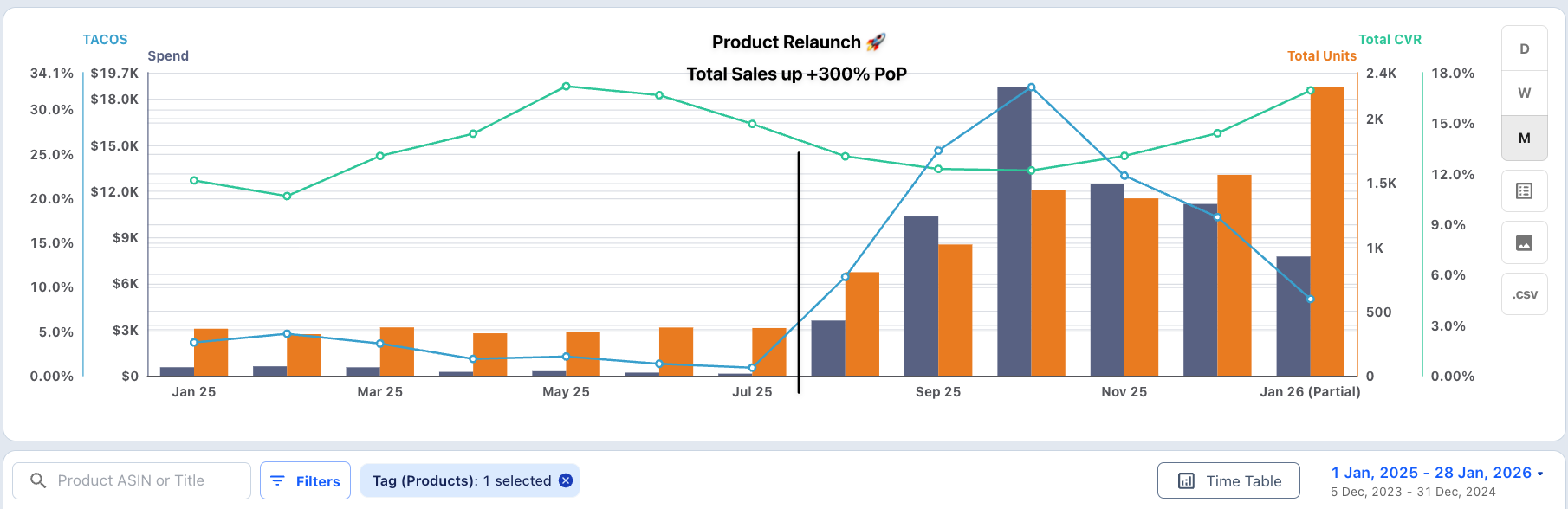
"TACOS Is the King of PPC Metrics"
What TACOS Gets Right
Let's give TACOS credit where it's due. The formula (total ad spend ÷ total revenue [organic + paid]) does something ACOS fundamentally cannot: it captures the halo effect of advertising.
If you spend $10K on ads and generate $30K in ad revenue plus $70K in organic revenue, your ACOS is 33% but your TACOS is 10%. That organic lift is the whole point of a well-run ad strategy, and TACOS shows it.
What TACOS Gets Wrong
Here's where it gets uncomfortable. TACOS can decline (and everyone celebrates) while the business is actually in trouble.
Scenario: TACOS Declining for the Wrong Reasons
- You cut ad spend aggressively. TACOS drops mathematically.
- Organic revenue hasn't grown; it was always there. You were just over-spending on ads that weren't doing anything.
- Or worse: organic revenue is growing because of seasonal demand, not because of your ads. TACOS declines, but your advertising had nothing to do with it.
Scenario: TACOS Increasing for the Right Reasons
- You launch five new products. Each requires heavy ad investment with no organic rank yet.
- TACOS spikes from 8% to 15%. Someone panics.
- But each new product is on track to become profitable. The TACOS increase is an investment, not a failure.
"TACOS is the metric that people graduate to when they realize ACOS is limited. But then they make the exact same mistake: they treat it as gospel instead of treating it as one signal among many. A declining TACOS means nothing if you don't know WHY it's declining."
The fundamental flaw with TACOS: it conflates correlation with causation.
Organic revenue grew this month and TACOS declined. Did ads cause the organic growth? Or did:
- Seasonal demand increase your organic sales?
- A competitor go out of stock, sending you their traffic?
- A TikTok video go viral in your category?
- Amazon's algorithm simply decide to test your product in new positions?
TACOS can't distinguish between any of these scenarios. It just shows a ratio changing. The why requires actual investigation: looking at Search Query Performance data, checking keyword ranks, monitoring competitors.
The worst version of TACOS-worship: "Our TACOS improved, so our PPC must be working." Maybe. Or maybe your organic baseline was always strong and your ads are doing nothing. Without isolating the variables, you genuinely cannot know.
When TACOS Is Actually Useful
- Long-term trend analysis (monthly/quarterly): Smooths out the noise. If TACOS is declining over 6 months while total revenue grows, something is probably working, but investigate what.
- Account-level health check: Useful for a quick pulse on whether ad spend is proportional to total business growth.
- Board-level reporting: Executives don't need keyword-level data. They need "are we spending less per dollar of revenue over time?" That's TACOS.
"CTR Matters More Than CVR"
The "CTR First" Argument
The people who argue for CTR have a logical point: conversion rate is meaningless without traffic. If nobody clicks, nobody buys. Your 50% conversion rate on zero clicks generates exactly zero dollars.
This is technically correct. And also misleading.
Because here's the thing: Amazon isn't short on traffic. There are billions of search impressions happening every month. If your main image is remotely competitive, your title includes the search term, and your price isn't insane, you'll get clicks. The question isn't whether people will click. It's whether they'll buy after they click.
Why CVR Wins
Seller B: 0.8% CTR × 8% CVR = 0.064% session rate
Seller A generates 56% more revenue per impression.
Seller B has the "better" CTR. And loses.
This is the core issue. Revenue is a function of impressions × CTR × CVR × AOV. You need all four. But CVR is the multiplier with the biggest range of outcomes in competitive categories.
In most competitive Amazon categories, CTR ranges from 0.3% to 1.0% across the top 20 products. A 3× range. CVR, however, can range from 5% to 30%, a 6× range. The variable with the widest spread has the most impact.
"You can have the best click-through rate in the world. But if they land on your page and bounce because your reviews are 3.5 stars, your images look like they were shot on a 2012 phone, and your price is 40% above the next guy, those clicks just cost you money."
Here's where this debate gets interesting. CTR and CVR aren't independent; they influence each other in subtle ways.
High CTR can LOWER your CVR
If your main image is misleading (shows a bigger product than reality), you'll get lots of clicks from people who then bounce when they see the actual product. High CTR. Terrible CVR. Net loss.
Low CTR can RAISE your CVR
If only highly qualified shoppers click your product (maybe your price is visible and filters out bargain hunters), your CVR will be high because every click is pre-qualified. But your volume might be too low to matter.
The Sweet Spot
The best products have accurate CTR; their main image, title, and price set correct expectations so that the people who click are the people who buy. The image sells honestly. The price matches the value. The reviews deliver on the promise.
Don't optimize CTR. Don't optimize CVR. Optimize the accuracy of your search result presence. When what shoppers see in search results perfectly matches what they find on your listing, both CTR and CVR improve simultaneously. Misalignment between the two is where money gets wasted.
"Bid Automation Works at Scale"
The 7 Reasons Bid Automation Fails
We didn't come to this conclusion lightly. We tested automated bidding across hundreds of accounts over years. Here are the seven failure modes we identified:
Amazon's advertising data has a 12-72 hour attribution lag. A click today might not show its conversion until 3 days later (using the 7-day or 14-day attribution window).
Most bid automation tools make decisions based on the most recent data. But the most recent data is incomplete. You're making bid changes based on data that hasn't finished populating.
Result: the tool lowers bids on keywords that are actually converting well (because the conversions haven't been attributed yet), and raises bids on keywords that look good today but will look terrible once the full data comes in.
Bid automation that runs daily using incomplete data creates a feedback loop: lower bid → fewer impressions → fewer conversions → tool thinks keyword is worse → lowers bid again. The keyword spirals into oblivion, not because it was bad, but because the automation never let the data fully populate.
How many clicks does a keyword need before you can trust its conversion rate? Most automation tools use lookback windows of 7-14 days. For a keyword generating 5 clicks/day, that's 35-70 clicks. With a 10% conversion rate, that's 3-7 orders.
Is 5 conversions over 10 days statistically significant? Absolutely not. The standard error is enormous. But the automation doesn't care. It sees "10% CVR over 14 days" and treats it as ground truth.
A keyword with a true 15% conversion rate might show 5% in a bad 14-day window purely due to random variance. The automation cuts the bid. The keyword loses volume. The variance persists because there's even less data. The keyword dies.
Most tools let you set a target ACOS and then optimize all keywords toward it. But not all keywords have the same purpose.
- Brand defense keywords need to win at almost any ACOS
- High-volume head terms are ranking investments
- Long-tail converting keywords are profit generators
- Category keywords are awareness plays
A single ACOS target applied to all four treats a defensive brand term the same as an exploratory category term. That's not optimization. It's intellectual laziness dressed up as technology.
Your bid doesn't just determine how much you pay. It determines where your ad appears. Different placements (top of search, rest of search, product pages) have radically different conversion rates, often 3-5× differences.
When automation lowers a bid, it doesn't just pay less for the same spot. It moves you to a worse spot, which has a lower CVR, which makes the keyword look even worse, which triggers another bid reduction.
The automation thinks it's optimizing. It's actually creating the poor performance it's responding to.
5. Context Blindness
Bid automation can't see outside its data silo. A competitor launched a Lightning Deal? A holiday is coming? You changed your main image yesterday? Amazon made an algorithm update? The automation doesn't know and doesn't adjust. It just sees numbers changing and reacts mechanically.
6. Macro vs. Micro Confusion
Good PPC management requires both macro decisions (budget allocation across campaign types, strategic keyword selection, objective setting) and micro decisions (individual bid adjustments). Automation only handles micro, and often does it poorly. But sellers treat it as if it handles both.
7. The Plateau Trap
Automated systems converge toward a local optimum. They find a "good enough" performance level and hover there, making tiny adjustments that don't meaningfully move the needle. A human operator would recognize the plateau and make a strategic shift: restructure campaigns, test new keywords, adjust strategy. Automation just keeps polishing the same mediocre configuration.
What Actually Works Instead
Use automation for the math. Use humans for the judgment. Set rules for obvious waste (pause keywords with 50+ clicks and zero conversions). But let human operators make the strategic calls: which keywords deserve higher investment, when to bid aggressively for ranking, when to pull back for profitability, and when to restructure entirely.
RPC-Based Bidding — Not Rules, Not Guessing, Just Math
AdLabs calculates every bid using Revenue Per Click × target ACOS. No "increase by 10% if ACOS is high" rules. No feedback loops built on incomplete data. The right bid, calculated from first principles, every time.
Try Free →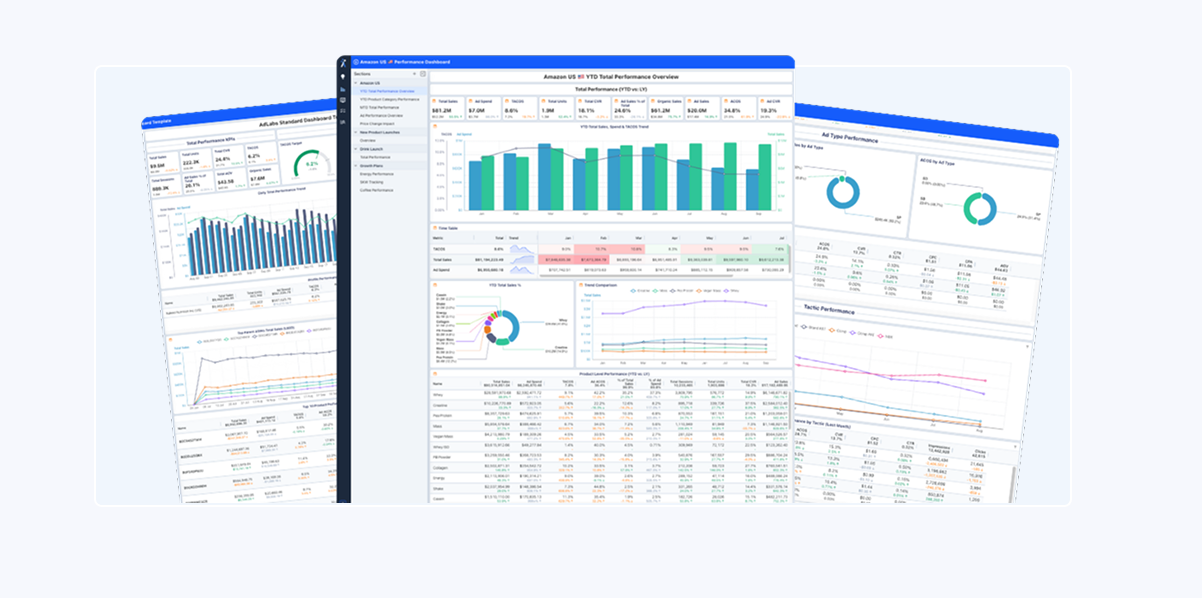
"Single Keyword Campaigns Are Overkill"
When Single Keyword Campaigns Actually Matter
Let's separate the signal from the noise. Single keyword campaigns make sense in specific, high-impact situations:
1. Ranking Campaigns
When you're aggressively bidding to improve your organic ranking on a high-value keyword, you need complete budget isolation. A ranking campaign for "organic protein powder" needs its own daily budget, not competing with 15 other keywords for shared budget. If you're testing whether $20/day is enough to hit position 1, you need to know it all went to that one keyword.
2. Top-Converting Keywords
Your best performer (the keyword that converts at 15% with a healthy margin) deserves its own campaign so you can bid with precision and monitor its performance without noise from weaker keywords. You want perfect visibility into that keyword's profitability.
3. Brand Defense
Branded campaigns targeting your brand name, variants, and misspellings should be isolated. You want to protect this territory with surgical bid control and clean performance data. Bundling brand keywords with generic terms would muddy the data and dilute your budget allocation.
The Case Against "Everything Should Be Single Keyword"
But here's where the dogma breaks down: not every keyword needs its own campaign. Separating your 50 long-tail, low-volume keywords into 50 individual campaigns creates organizational overhead without proportional benefit. You're managing infrastructure for keywords that spend $1-2/day and have minimal ranking impact.
The reality: most sellers are better off grouping keywords logically by theme, match type, or intent, and then using single keyword campaigns strategically for the 10-20% of keywords that truly matter. Your ranking keywords, brand defense terms, and top performers get the isolation. Your supporting keywords get organized into tighter, manageable clusters.
Structure based on strategic importance, not dogma:
- Tier 1 (Single Keyword): Ranking campaigns, brand defense, and your top 10-15 converting keywords. These need precision.
- Tier 2 (Themed Multi-Keyword): Group related keywords by intent or match type. Your "best practices" keywords, "competitor defense" keywords, "long-tail" clusters. Keep these 5-10 keywords per campaign maximum.
- Tier 3 (Discovery): Auto campaigns and broad match campaigns meant to find new keywords. These are exploratory; structure doesn't matter.
This approach gives you surgical control where it matters (ranking, profitability, brand defense) and practical manageability everywhere else. You're not spending 80% of your management effort optimizing the 20% of keywords that spend $1-2/day.
The Real Trade-off: Control vs. Manageability
Single keyword campaigns give you the highest degree of control. You get crystal-clear data on each keyword. You can optimize bids with surgical precision. You can run ranking campaigns with budget certainty.
But with that control comes overhead. More campaigns means more settings to manage, more optimization decisions, more complexity in bulk operations and reporting.
The question isn't "should I use single keyword campaigns?" It's "which keywords deserve the control?" Answer: your ranking keywords, brand defense terms, top converters, and strategically important keywords. Everything else can be grouped logically and managed in tighter clusters without losing visibility or control.
"Placement ACOS Tells You Where to Bid"
Why Placement ACOS Is Broken
Problem 1: You Can't Separate Placements from Keywords
This is the fundamental thing most sellers get wrong. There is no such thing as a "placement bid." Placement modifiers multiply your underlying keyword bids. A $1.00 keyword bid with a 50% Top of Search modifier means you're bidding $1.50 for top of search on that keyword. That's it. Placements are just collections of keyword bids displayed in different locations, not independent bidding units.
So when your placement report shows a 15% ACOS at top of search, that number is the blended result of every keyword bid in that campaign being multiplied by the modifier, hitting different CPCs, and converting at different rates. It's not telling you anything actionable about "top of search" as a category.
Problem 2: Lower ACOS Does Not Mean Better Performance
Here's a real example. Rest of Search shows a 13.9% ACOS with a $0.97 CPC. Top of Search shows a 20.4% ACOS with a $1.48 CPC. Most sellers would look at this and say "Rest of Search is winning, shift budget there."
But that ACOS difference is almost entirely driven by the cost difference, not by conversion quality. When you look at what actually matters (conversion rate and Revenue Per Click), the picture changes completely:
Rest of Search: 9.6% CVR | $7.02 RPC
Product Pages: 6.3% CVR | $4.77 RPC
Top of Search actually converts slightly better and generates the highest revenue per click. The "worse" ACOS is just because it costs more to show there. ACOS hides this entirely.
Problem 3: The Modifier Math Works Against You
You can't reduce bids for a specific placement. You can only increase them for others. So when sellers see "bad" ACOS at product pages, they lower their base bid (thinking they're fixing product pages) and crank up the top of search modifier. But lowering the base bid affects every placement. Now rest of search is starved. You've optimized one placement and broken two.
"Placement modifiers multiply your base bid. They don't set independent bids. If you lower your base bid to 'fix' product page ACOS and boost your top of search modifier to compensate, you've just cut your rest of search bids too. You're not optimizing placements. You're reshuffling the same problem."
The right approach (and what AdLabs does): use your base keyword bid to control overall ACOS, then set placement modifiers based on relative conversion performance across placements. Two separate jobs, two separate levers.
- Compare conversion rates across placements, not ACOS. CVR tells you which placements actually close sales. In the example above, Top of Search and Rest of Search convert at nearly the same rate (~9.7%), while Product Pages lag at 6.3%. That relative difference is what matters.
- Calculate RPC for each placement. Revenue Per Click reveals the true value of a click at each placement. Top of Search at $7.26 RPC vs. Product Pages at $4.77 RPC is real, useful information for understanding where your ad dollars generate the most revenue.
- Set the lowest-converting placement as your baseline (0%), then calculate modifiers for other placements relative to that. Using the data above: Product Pages 0%, Rest of Search 47%, Top of Search 52%. This way your modifiers reflect actual performance differences, not ACOS noise.
- Control ACOS through your base keyword bid. That's where your profitability lever lives. If your overall ACOS is too high, adjust the base bid. Placement modifiers are for allocation (where to put more or less spend), not for cost control.
For the full breakdown with real performance data and step-by-step modifier calculations, see Why Placement ACOS Does Not Matter in Amazon PPC in the AdLabs Help Center.
TACOS, Organic %, and the Metrics That Actually Tell You What's Working
AdLabs tracks TACOS, organic %, ad sales vs. total sales, and placement-level CVR in one dashboard — so you can stop relying on ACOS in isolation and start making decisions from the full picture.
Try Free →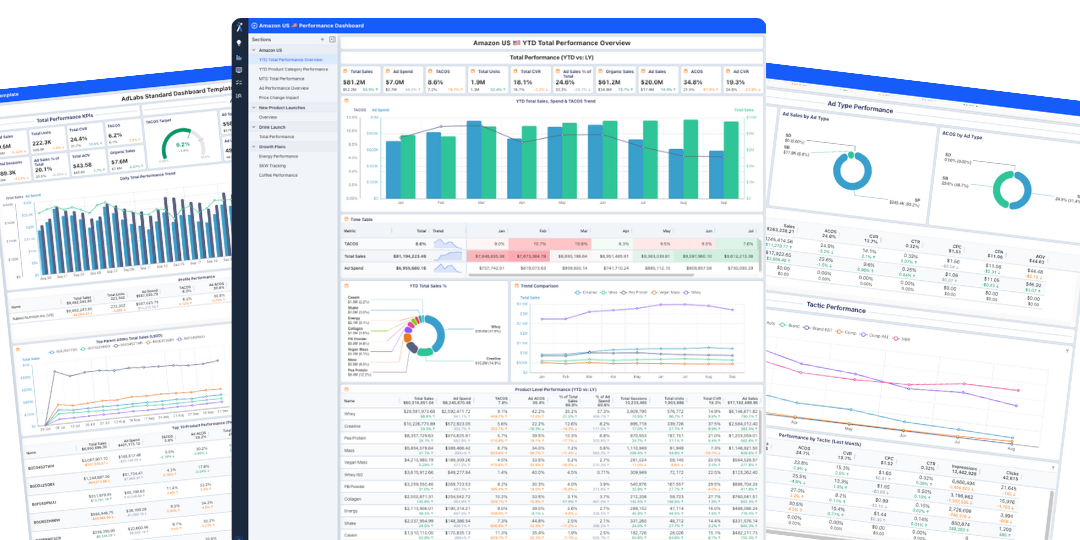
The 7 Biggest Amazon PPC Myths: Busted
We saved the rapid-fire round for last. These are the myths we encounter most often in audits, calls, and client onboarding. Each one deserves its own article. Here's the condensed version.
What to do instead: Focus on maximizing sales per dollar spent. A $5,000 budget with 100 conversions beats a $10,000 budget with 80 conversions, both for your wallet and for your ranking.
What to do instead: Start with data. Use SQP to see what keywords shoppers actually use. Use Brand Analytics for top search terms. Use Cerebro or similar reverse-ASIN tools. Run auto campaigns as a secondary discovery channel, not a primary strategy.
What to do instead: Test SBV on your top 10 converting keywords. Compare performance head-to-head with SP. For many products, SBV captures above-the-fold real estate with higher engagement rates than standard SP placements.
What to do instead: Before negating, check the conversion potential. Is the keyword relevant? Does it have search volume? Did it convert historically? If yes, lower the bid first. Only negate keywords that are genuinely irrelevant to your product, not keywords that just haven't converted yet.
What to do instead: Analyze YOUR account's hourly performance data. Which hours actually have good conversion rates? Which hours waste money? Once you know this from your data, then make dayparting decisions if they're justified. Use bid adjustments instead of hard on/off pauses so you're not completely abandoning lower-performing hours.
What to do instead: Use suggested bids as one data point, not a starting position. Calculate your actual bid ceiling based on your specific metrics: what profit margin do you need per sale? What's your realistic conversion rate on this keyword? How much can you afford to pay per sale? Your answers to these questions should drive your bids, not Amazon's algorithm.
What this means: Don't be afraid to restructure campaigns. If your account architecture needs reorganization, do it. The data that matters (your ASIN's performance on specific keywords) lives at the ASIN level, not trapped inside a campaign. Restructure freely.
Notice something? Every myth above simplifies a complex system into a rule that feels safe. "Always negate." "Always use auto campaigns." "Always follow suggested bids." The reality of Amazon PPC is that almost nothing is "always." Context determines strategy. Data determines tactics. And the sellers who win are the ones comfortable with nuance instead of reaching for rules.
The Final Verdict
What Actually Works in Amazon PPC
We've torn apart nine myths and dissected seven more. If your head is spinning, good. That means assumptions are being challenged. Here's what we believe after managing millions in ad spend and debating these topics for years:
The best Amazon PPC strategy isn't a strategy at all. It's a framework for making decisions when no one-size-fits-all rule applies.
The Principles That Survive Every Debate
- Conversion rate is king. The CTR vs. CVR debate, the ACOS debate, the ranking debate, CVR is the common denominator in all of them. Fix your offer first, optimize your ads second.
- Context determines everything. A 50% ACOS can be brilliant or terrible depending on your margin, your objective, and your competitive position. Anyone who gives you a universal ACOS target is selling you a shortcut that doesn't exist.
- Humans set strategy, machines execute tactics. Use AI and automation for the repetitive work. But never let a tool make a strategic decision it doesn't have the context to make. Semi-automatic beats full-automatic every time.
- Clean data requires clean structure. Single keyword campaigns for anything that matters. Proper naming conventions. Separated objectives. If you can't cleanly answer "how is this keyword performing?" your account structure is a problem.
- No metric is the metric. ACOS is a view. TACOS is a view. Placement ACOS is a view. Revenue Per Click is a view. Each one shows you part of the picture. Use them all. Worship none.
- Question everything, including us. We've changed our minds on plenty of positions when the data demanded it. The Amazon ecosystem evolves constantly. What works today might not work in six months. Test. Measure. Adapt.
The Uncomfortable Truth
Most sellers want Amazon PPC to be simple. They want a playbook: do X, get Y. And there are plenty of people willing to sell them that playbook.
The uncomfortable truth is that PPC is a competitive, dynamic system where the rules change, the data lags, the tools are imperfect, and the right answer depends on a dozen variables unique to your business. There is no playbook. There's only a mindset: be rigorous, be skeptical, follow the data, and never stop questioning the "best practices" that everyone treats as gospel.
| If Someone Tells You... | Ask Them This |
|---|---|
| "Just lower your ACOS" | At what cost to total revenue and market share? |
| "Let AI handle your bids" | How does it handle incomplete attribution data? |
| "TACOS is all that matters" | Can you prove causation between ad spend and organic lift? |
| "Top of search is always best" | What's the CPC premium vs. the incremental conversion value? |
| "You need more ad spend to rank" | What's my current conversion rate vs. market? |
| "Negate everything that doesn't convert" | How much data does that keyword actually have? |
| "This PPC hack will change everything" | Show me the controlled test with statistical significance. |
That's the AdLabs approach. Semi-automatic. Data-driven. Human-controlled. Perpetually skeptical.
Stop believing myths. Start testing assumptions.
This guide is based on research from 9 episodes of That Amazon Ads Podcast (Episodes 011, 017, 029, 032, 040, 057, 058, 097, 107), combined with insights from managing hundreds of Amazon advertising accounts across millions in ad spend.